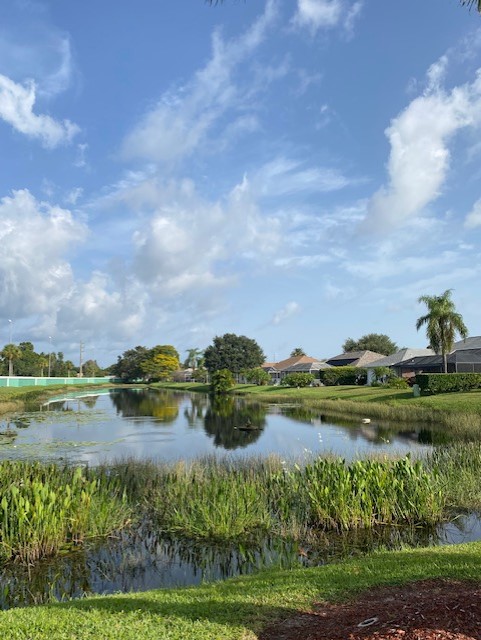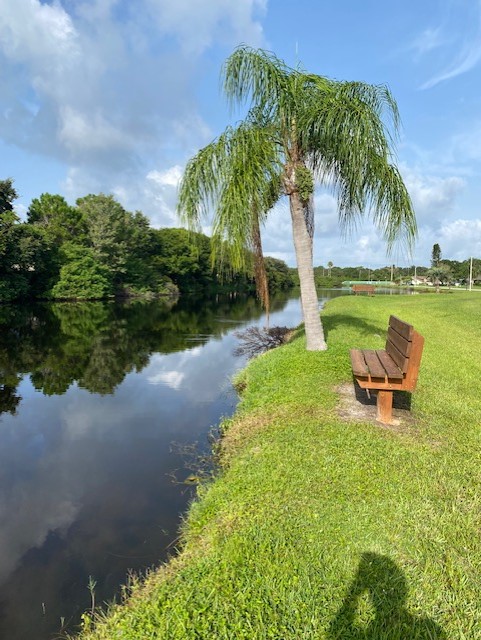
This page contains information regarding the Englewood Road Wall and Pond front stabilization project. This includes the details related to the severe shoreline erosion and risk to our existing 776 walls and the options for solving the problem.
You may scroll through the page or use one of the quick links below to jump to what you need.
Overview of Problem
Photo Gallery
Armored Catfish Problem in Florida
Overview of Problem
To summarize where we are and how this impacts us, we should understand that Gulf View Estates owns two long sections of stuccoed concrete block wall with white painted Styrofoam uppers and fake pilasters sitting on GVE owned land.
These walls are approximately 1400 feet long and are bisected by the Adams Road entry.
When GVE was built, there was about 12-14 feet of gently sloping land protecting the base of the walls from the pond shore. Over the intervening 40 some years, minor erosion from natural conditions has combined with the extreme burrowing of the invasive armored catfish to decrease the shoreline to within one or two feet from the wall foundation in several areas.
But the entire shorefront of the southern pond area has been reduced to below minimum viable shoreline. Therefore, the entire southern wall is at risk of collapse if drastic restoration measures are not undertaken swiftly to that entire shoreline.
To that end, the board is soliciting bids from firms which perform rip-rap, waterborne retaining walls, bulkheading and similar engineering projects.
We will report on the progress and will undertake a special assessment cycle shortly to tackle this problem.
Failure to correct this problem will likely result in several bad outcomes:
- the rebuilding of the shoreline which we are contemplating
- the need to remove and rebuild the entire wall from scratch (exceedingly expensive) after failure
- possible damage to the underground utilities running near Englewood road (huge county bill to us)
- potential permitting issues with rebuild from new scenarios
- noise pollution from route 776 if wall was down for any period of time.
Below, we have attached a briefing generated from AI to better explain the so called armored catfish problem in Florida.



Erosive Effects of Armored Catfish on Lakefront Shorelines in Florida Freshwater PondsUnderstanding the Environmental Impact of Invasive Catfish Species
Introduction
Armored catfish, particularly species such as the suckermouth catfish (Pterygoplichthys species), are invasive fish that have established populations in many Florida freshwater ponds and lakes. Originally from South America, these catfish have adapted well to Florida’s warm climate, but their presence has led to significant ecological concerns, especially regarding shoreline erosion.
How Armored Catfish Cause Erosion
The primary way armored catfish contribute to shoreline erosion is through their nesting and burrowing behaviors. During the breeding season, these fish dig extensive burrows into the banks of ponds and lakes. Each burrow may extend several feet into the shoreline, destabilizing the soil and creating cavities beneath the ground surface.
- Burrow Construction: Armored catfish use their strong mouths and bodies to excavate tunnels in the lakefront embankments. These tunnels serve as nesting sites for eggs and fry.
- Soil Displacement: The act of digging displaces significant amounts of soil, which can collapse into the water. This process weakens the structural integrity of the shoreline.
- Increased Erosion: With the soil structure compromised, rain, waves, and water currents more easily wash away the remaining soil, accelerating the erosion process.
Environmental and Property Impacts
The erosion caused by armored catfish has consequences for both natural ecosystems and human interests:
- Loss of Vegetation: As shorelines erode, native plants that stabilize the banks are uprooted or drowned, reducing habitat for wildlife and further increasing susceptibility to erosion.
- Degraded Water Quality: Eroded soil enters the water, increasing turbidity and potentially leading to algal blooms and other water quality issues.
- Property Damage: In residential or recreational areas, eroding shorelines can damage docks, seawalls, and other structures, posing safety and financial risks.
- Loss of Habitat: The burrows themselves can undermine the shoreline, making it unsuitable for native species such as turtles and birds that rely on stable banks for nesting.
Conclusion
The presence of armored catfish in Florida freshwater ponds is a significant driver of shoreline erosion. Their burrowing behavior destabilizes banks, accelerates soil loss, and leads to a cascade of environmental and economic impacts. Effective management and control of these invasive species and shoreline hardening are essential to protect Florida’s aquatic habitats and waterfront properties.